In the heart of Aragón, lies the Old Town of Belchite, a place that stands as a silent witness to the horrors of the Spanish Civil War. This town, frozen in time, bears the scars of a devastating conflict that tore Spain apart 88 years ago.
When I was a child, I always asked my grandfather to tell me stories about his life.
I remember as if it were yesterday how his blue eyes clouded over as he recounted, among silences and first-person, some of the terrible war events that took place in Belchite between August and September 1937.
The Battle of Belchite, one of the fiercest of the Spanish Civil War, was not part of the strategy of either side. However, circumstances turned in such a way that on August 24th, 1937, the offensive began, which, two days later, completely encircled the town. On September 1st, the Republican aviation systematically attacked the urban centre. On September 3rd and 4th, terrible house-to-house combat took place. In the early morning of September 6th, the last defenders tried to flee. About three hundred people managed to cross the Republican lines. Unfortunately, only eighty reached Zaragoza.
In twelve days, there were 5,000 casualties.
It has been more than fifty years since those memorable moments listening to my grandfather’s stories. In the meantime, this granddaughter set off to explore the world, and my dear grandfather passed away.
Thirty-three years later, the whims of Providence brought me back to my native Aragón. Two years later, I settled just nineteen kilometres from that “ground zero” from which I learned so much about war calamities as a child. It would still be another two and a half years before I visited the Old Town of Belchite. I lacked the courage to face, among tourists, the many memories of that place laden with so much suffering, but everything comes in its time…
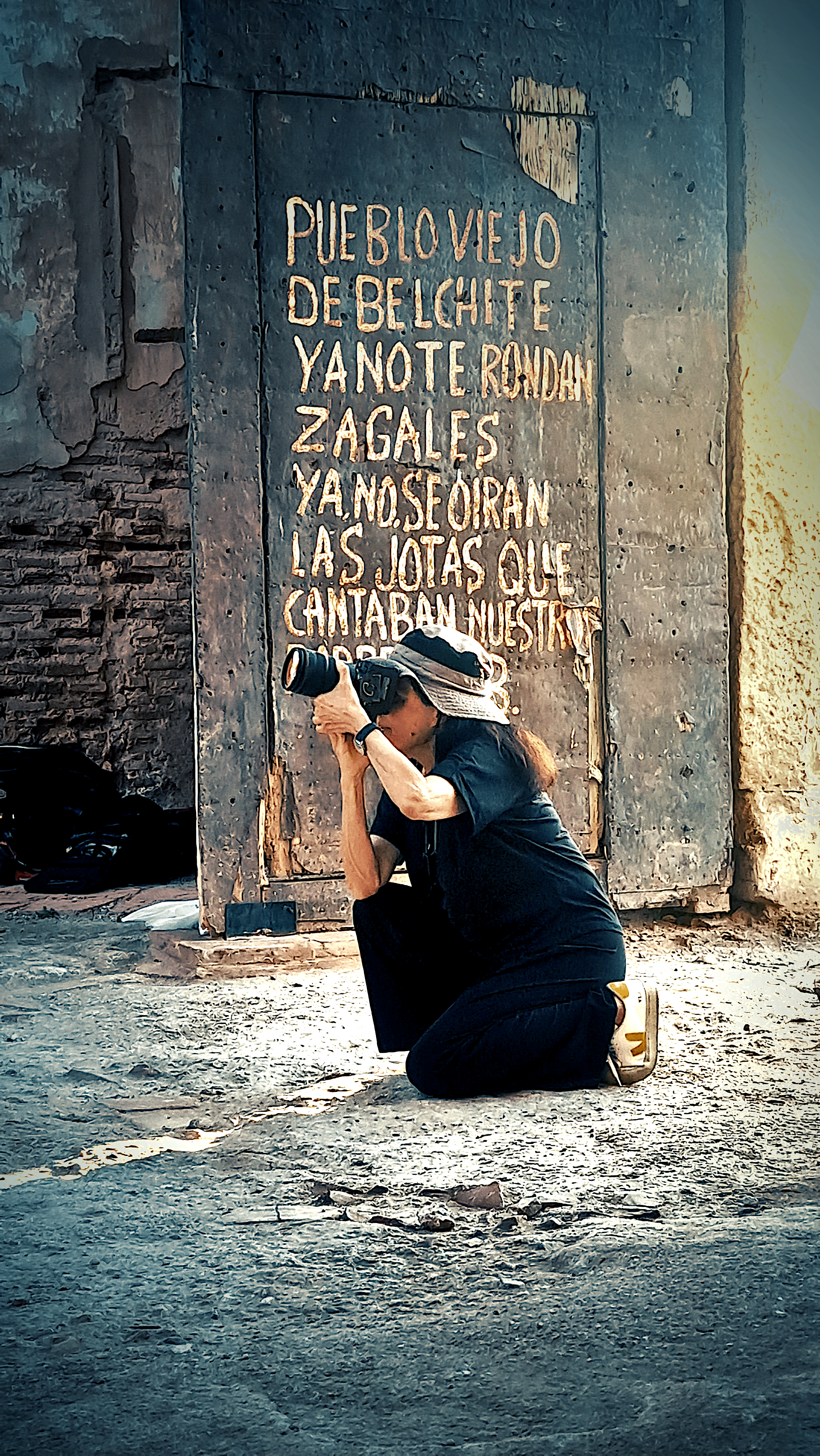
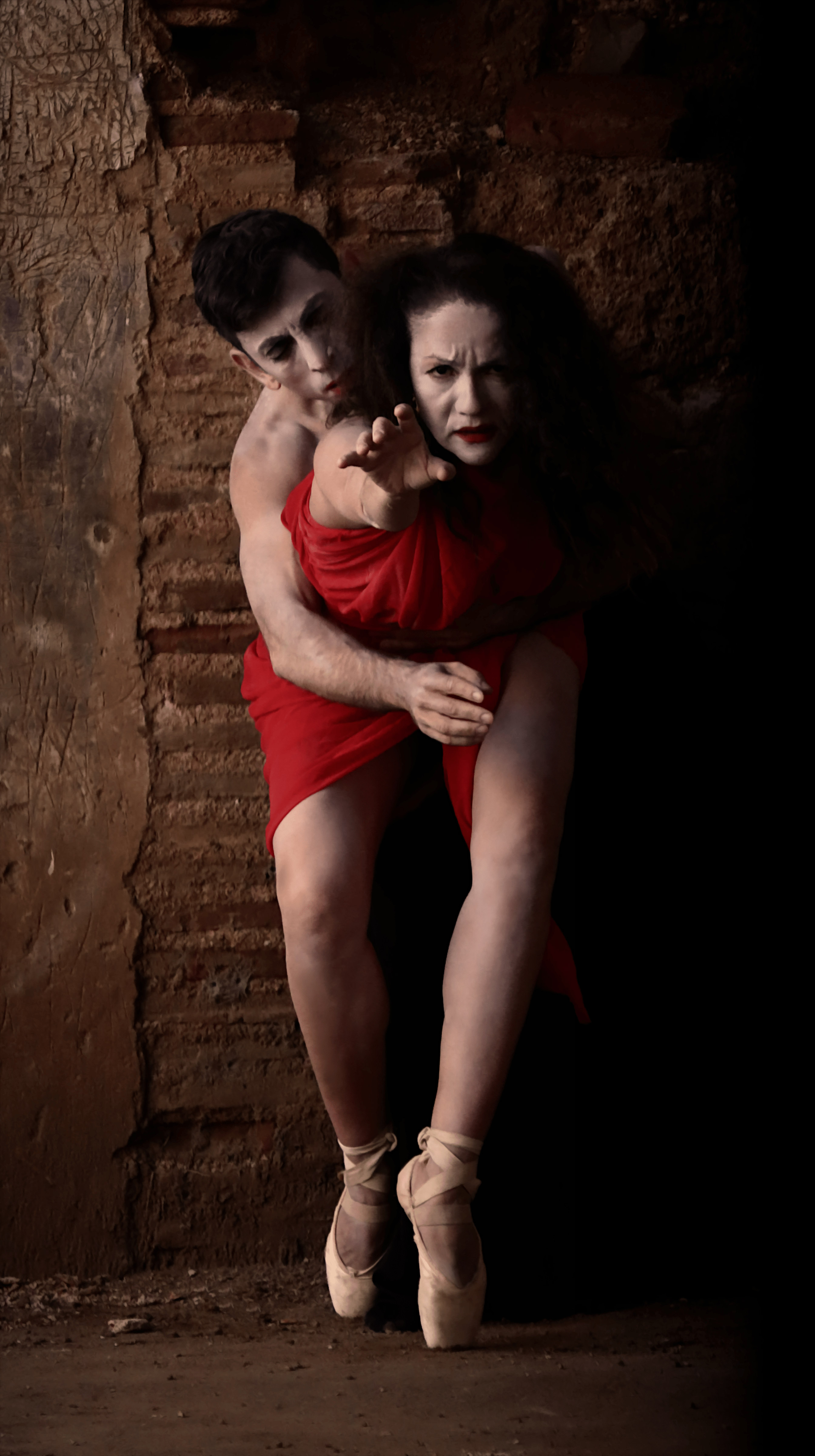
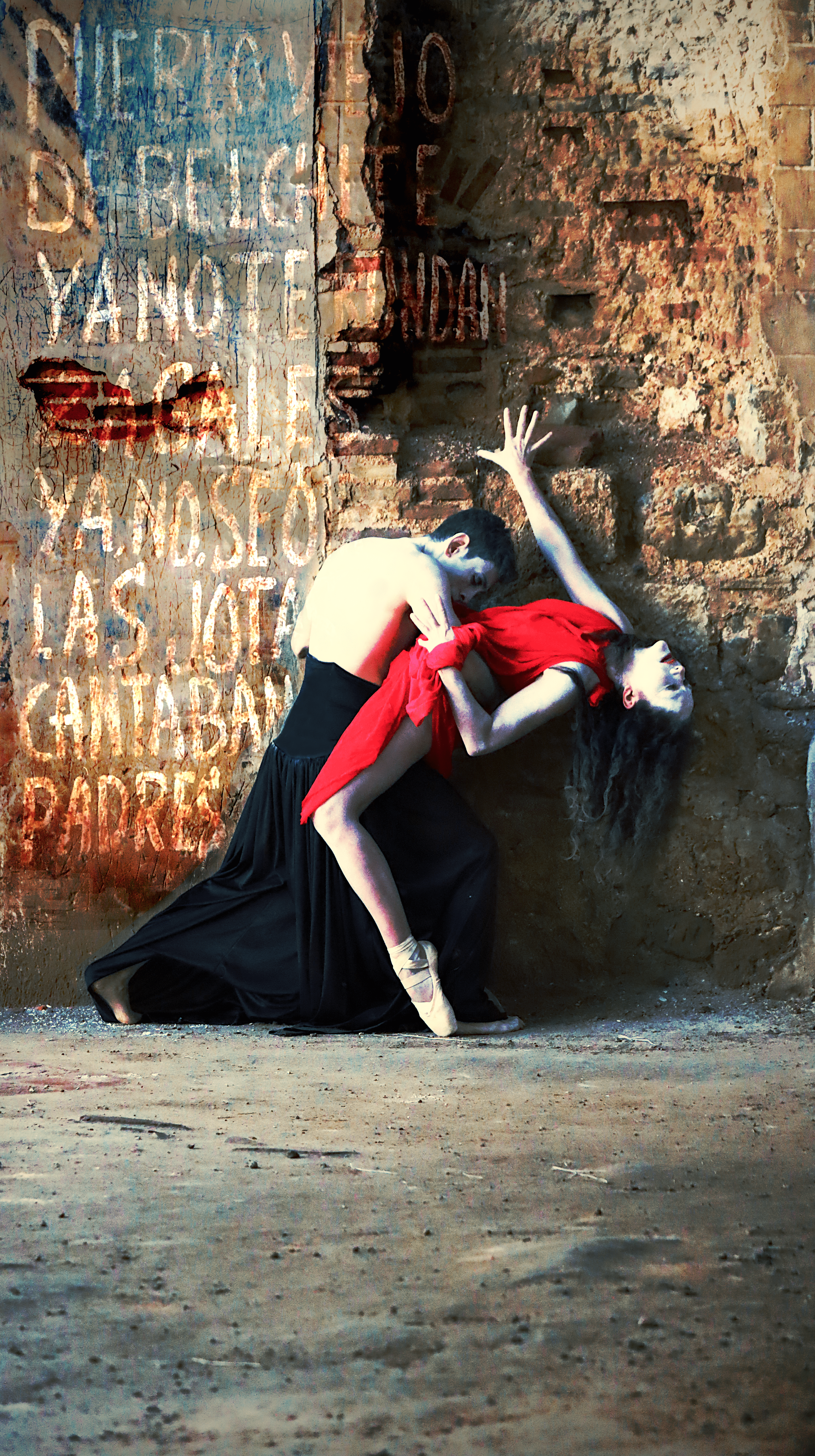
In early October 2023, photographer Isabel Muñoz, along with the Belchite Viejo Foundation and the Territorio Goya Cultural Association, organised the photographic workshop “The Dance of Memory”. My intuition whispered to me that this was the opportunity I had been waiting for to enter the Old Town through the Villa Arch.
There, we gathered for three unforgettable days, a group of about twenty people, including photographers, Isabel Muñoz’s team with Teresa Silva and Emilio Ferro (dancers), and María José Andrés from the Belchite Viejo Foundation, who successfully ensured everything ran smoothly.
From the moment I set foot on the cobblestone ground of the Villa Arch, a torrent of emotions overwhelmed me. I felt a mixture of sadness, respect, and gratitude as my grandfather’s memories came to life in my heart. It was as if I could see through his eyes, experience his fear and courage, and understand more deeply the invisible wounds he carried within.
Over the centuries, this ancient town managed to withstand numerous wars. To name a few, in 1118 Alfonso I “The Battler” conquered the then Belsid, driving out the Berber groups related to the Umayyad Dynasty. Four years later, he created the “Brotherhood of Belchite,” a military order aimed at defending the southern part of the Kingdom of Aragón from the Muslims. In the first decade of the 19th century, the town fell into the hands of a French garrison during the War of Independence. In 1838, during the First Carlist War, the army of Carlos María Isidro subjected Belchite.
In early 1936, Belchite had about 3,800 inhabitants and 1,200 buildings. The town had three entrances, flanked by 18th-century baroque arch-chapels: the San Roque Arch in the north, the Villa Arch, and the San Miguel Arch, of which only rubble remains. The town was not walled as such. The houses built close together created this defensive role, protecting the town from attacks, plagues, and epidemics that sometimes decimated the population, such as the cholera epidemic of the 16th century.
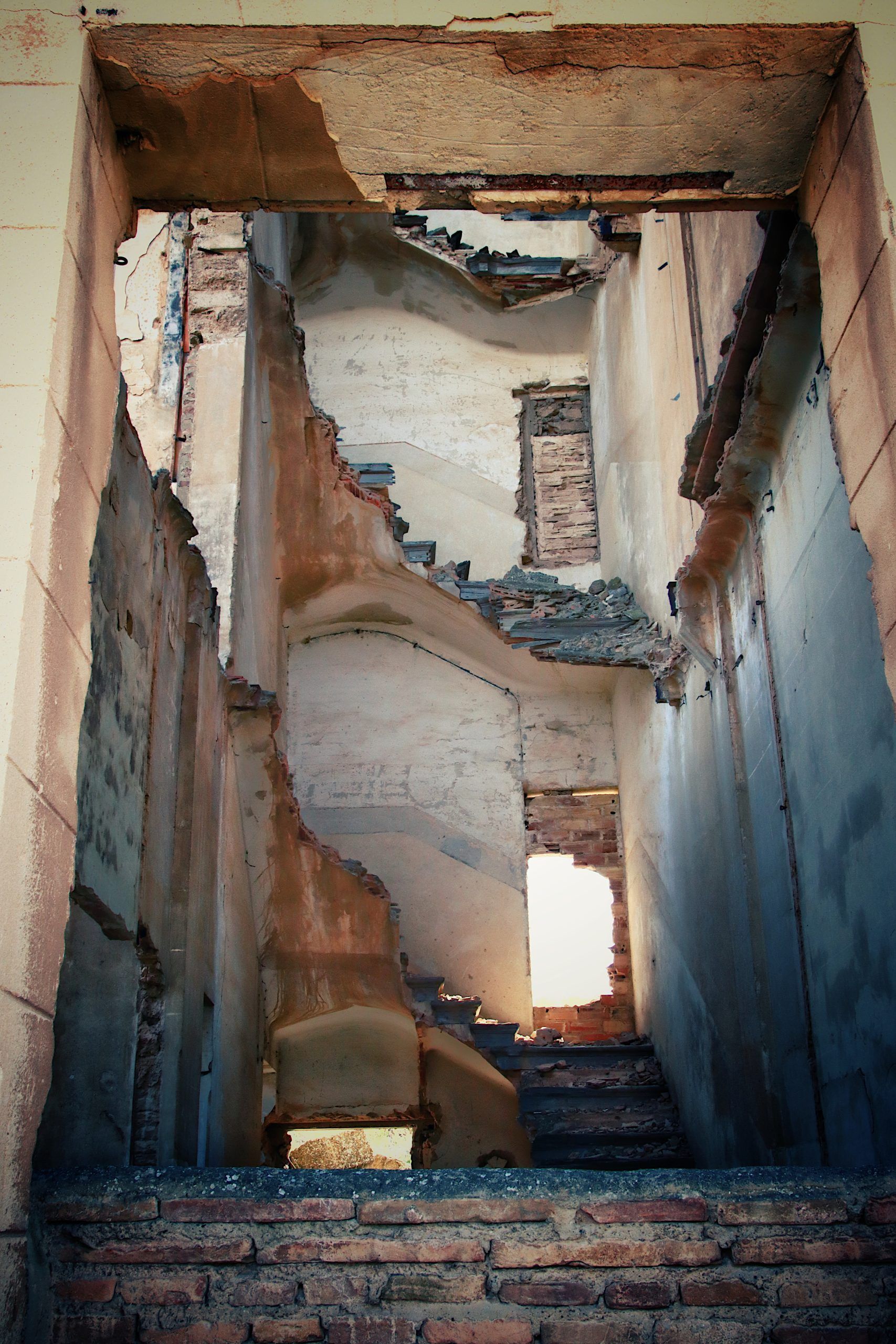
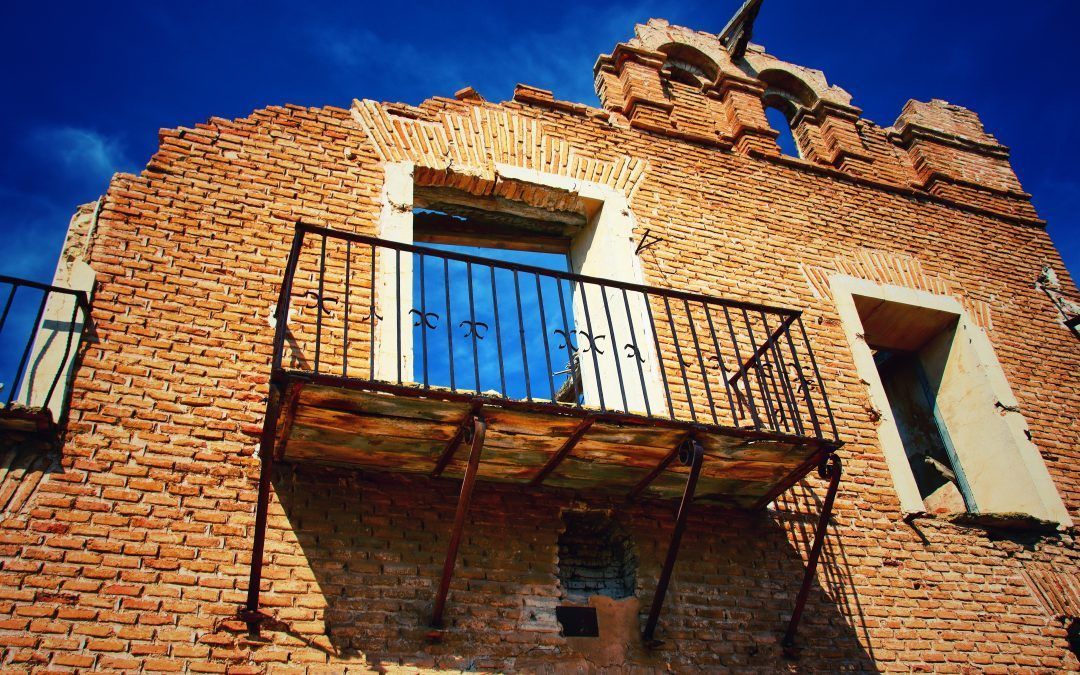
The desolation that the Battle of Belchite left in its wake in the summer of 1936 does not reflect the beautiful town it once was. The layout is typically Mudejar, with a main street where the most prominent houses were located. Dominica Fanlo’s house, known as “Casa Domi,” was one of them. The only one built of concrete, unlike the others which were adobe houses. The main street also had shops and even an impressive branch of the Banco Zaragozano. The secondary streets connected to the most important religious buildings.
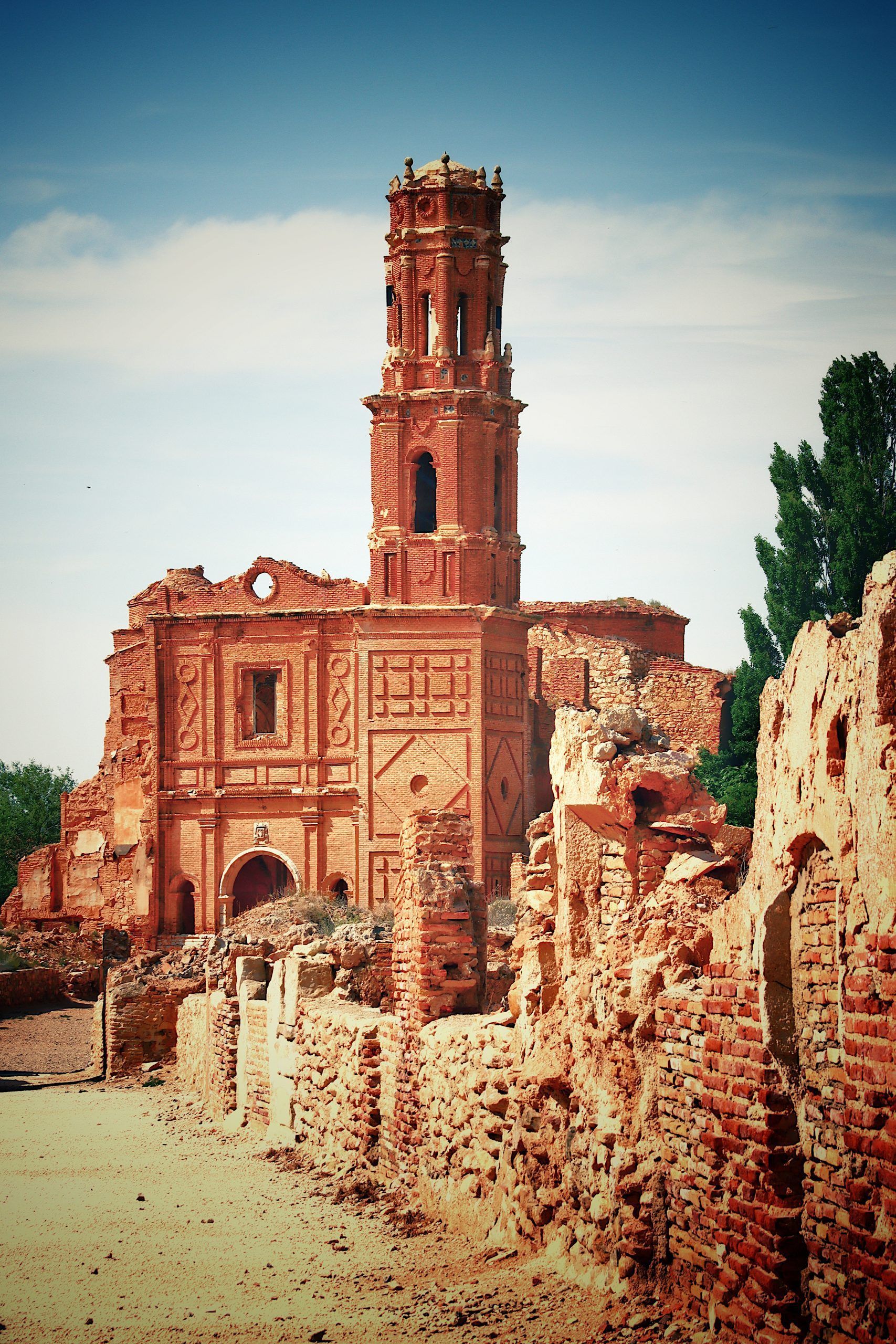
The church of San Martín de Tours, whose original construction dates back to the late 14th century, had its last renovation in the 19th century when the neoclassical-style façade was built. Next to the church of San Martín is the convent of San Rafael.
In the square of the Augustinian fathers’ cloistered convent stands the church of San Agustín.
At the end of the Old Square is the Clock Tower, belonging to the old church of San Juan. Its construction is Mudejar from the 14th-15th centuries. It is believed that this church was the transformation of the old Jewish synagogue. In the 17th century, it became private property, and the bells were replaced by a clock. Later, the church was converted into a theatre that offered great evenings of entertainment until the start of the Civil War. The clock stopped at the Angelus hour at some point during the Battle of Belchite. Many efforts were made to fix it, but the clock, now located in the tower of the New Belchite Church, never worked again.
The remains of Belchite are a powerful reminder of the fragility of peace and the imperative need to remember our history.
Every stone, every deserted alley, speaks to us of shattered lives and broken dreams. Visiting Old Belchite is not just a trip to the past; it is a solemn tribute to the lost lives and a profound reflection on the price of freedom and the resilience of the human spirit.
May the Old Town of Belchite inspire us to build a future where such horrors are never repeated.
Old Town of Belchite, no lads will hang around you anymore, no one will ever listen again the jotas our parents used to sing.
~Natalio Baquero~